
Mason City Directory Shelves
Mason City city directories are spread across local, national, and commercial genealogy collections. The table distinguishes a verified run from a broad catalog that still needs locality filtering. Exact shelf holdings, gaps, call numbers, and copy rules should be confirmed before a visit.
| Collection | Years found | Where held | Access |
|---|---|---|---|
| R.L. Polk directories | 1900, 1901, 1903-05, 1907-11, 1913-16, 1922, 1924-26, 1928-30, 1932, 1934-35, 1938-42, 1945, 1947, 1950, 1953, 1955-60 | Local and area library catalog material | Confirm edition and shelf access with MCPL Archives |
| Iowa White and Yellow Pages, Mason City | May 1958-May 1961 | Library of Congress | Free online images and OCR |
| Historical directories and local files | Edition list not published | MCPL Archives and NCIGS | In person, appointment, phone, or research request |
| U.S. City and Business Directories | Collection spans about 1749-1990 | FamilySearch | Filter for Mason City; login or affiliate limits may apply |
| Reverse or criss-cross run | No exact local run verified online | Ask MCPL and NCIGS | Staff-assisted shelf check |
No single official online series covers every year. MCPL does not publish an itemized pre-1938 run, and an ordinary Polk volume should not be assumed to contain an address-order section. A missing catalog result is a reason to ask an archivist, not proof that an edition never existed.
Mason City Polk Year Records
R.L. Polk is the named publisher for the surfaced runs. Their annual or near-annual spacing makes them useful for tracing changes between federal census years. Coverage is uneven, especially before 1938, and the year printed on a catalog record must be checked against the title page and edition statement.
Search a surname in one known year, then move both backward and forward. Preserve initials, spouse references, occupation, employer or business, and the full address with its NW, NE, SW, or SE quadrant. A person absent from one edition may have moved, died, gone unlisted, been missed by the canvass, or appeared under a variant name.
For local access, call Mason City Public Library Archives at 641-421-2721 and ask for the desired year. The archive is at 225 2nd St SE. Library hours are Monday through Thursday 9:00 a.m. to 7:00 p.m. and Friday and Saturday 9:00 a.m. to 5:00 p.m., but archive staffing should be confirmed.
Decode Mason City Entries
The digitized 1958 telephone volume shows the field pattern in an actual local directory. Entries may carry a surname, given name, middle initial, honorific, professional credential, business affiliation, residence address, rural route, exchange, and telephone number. One entry can list both a business and a residence, so labels matter.
| Name form | Surname, given name, middle initial, or honorific; compare variants across editions. |
|---|---|
| Address | House number, street, and quadrant; inspect the page image when OCR drops punctuation. |
| Role | Residence, business, institution, rural route, or alternate “if no answer” listing. |
| Occupation | A credential or business tie may appear, but its absence proves nothing. |
| Exchange | A historical phone exchange helps identify the edition and line, not a current contact. |
The Library of Congress directory item supplies both images and searchable OCR. Search text can get close to a page, but the scan is the record to cite.
- Criss-cross directory
- An address-order section or volume that lets a researcher begin with a street and house number.
- Householder index
- A list centered on the person associated with a household; coverage rules differ by publisher and year.
- Abbreviation key
- The volume's own legend for symbols and shortened terms. Capture it before interpreting an entry.
Mason City Records in 1958
The 1958-61 telephone item contains 589 images and preserves more than alphabetical names. Its civic and street guide reflects quadrants, exchanges, schools, hospitals, the courthouse, fire and police services, and library landmarks. It is a compact picture of how Mason City addresses and institutions were described at the time.
An OCR line should be read as a set of fields, not copied as a modern profile. The safest inventory is name, credential or business, residence label, address, exchange, edition, and page image. Historical telephone numbers should remain historical citations.
Directional quadrants are critical. A dropped NW or SE can point to a different place. Compare the image with a city map, parcel source, or street guide before linking an old entry to a current lot.
Mason City Archive Access
MCPL Archives keeps city directories, local documents, photographs, maps, artifacts, and the Autograph Collection. Some library databases require a librarian authorization code or password. No verified public statement promises a specific genealogy subscription, so call instead of assuming remote access.
The North Central Iowa Genealogical Society library at 75 S Georgia Ave is open Monday through Saturday from 9:00 a.m. to 4:00 p.m. Its collection exceeds 5,000 items and serves nine North Iowa counties. Categories include directories, census, vital, military, naturalization, obituaries, cemeteries, church histories, maps, and plat atlases. Most material is intended for library use.
A good request gives the full name and variants, an approximate year, Mason City address or township, record type, known relatives or occupation as identity separators, and one exact question. Email research@ncigs.org for a research request. Ask about reproduction costs before ordering pages.
Mason City Record Formats Changed
Local history survives in several formats. The NCIGS obituary project began with Globe Gazette floppy disks and moved to online obituaries in summer 1993. The Library of Congress offers OCR beside scanned pages. County historic indexes appear as scanned books, while modern parcels and permits live in web systems.
That change affects access. Searchable text can miss names, initials, or line breaks. A database may need a library login. An archive item may have no remote image. Save the edition, page or image, file name, URL, access date, and the format actually reviewed.
This preservation story is also an insider tip: when a name search fails, ask what format covers that year. A shelf volume, microfilm reel, card file, floppy-derived index, or page image may hold the answer that a web search missed.
The Mason City SmartGov portal illustrates the modern, record-specific interface that replaced many paper request paths.
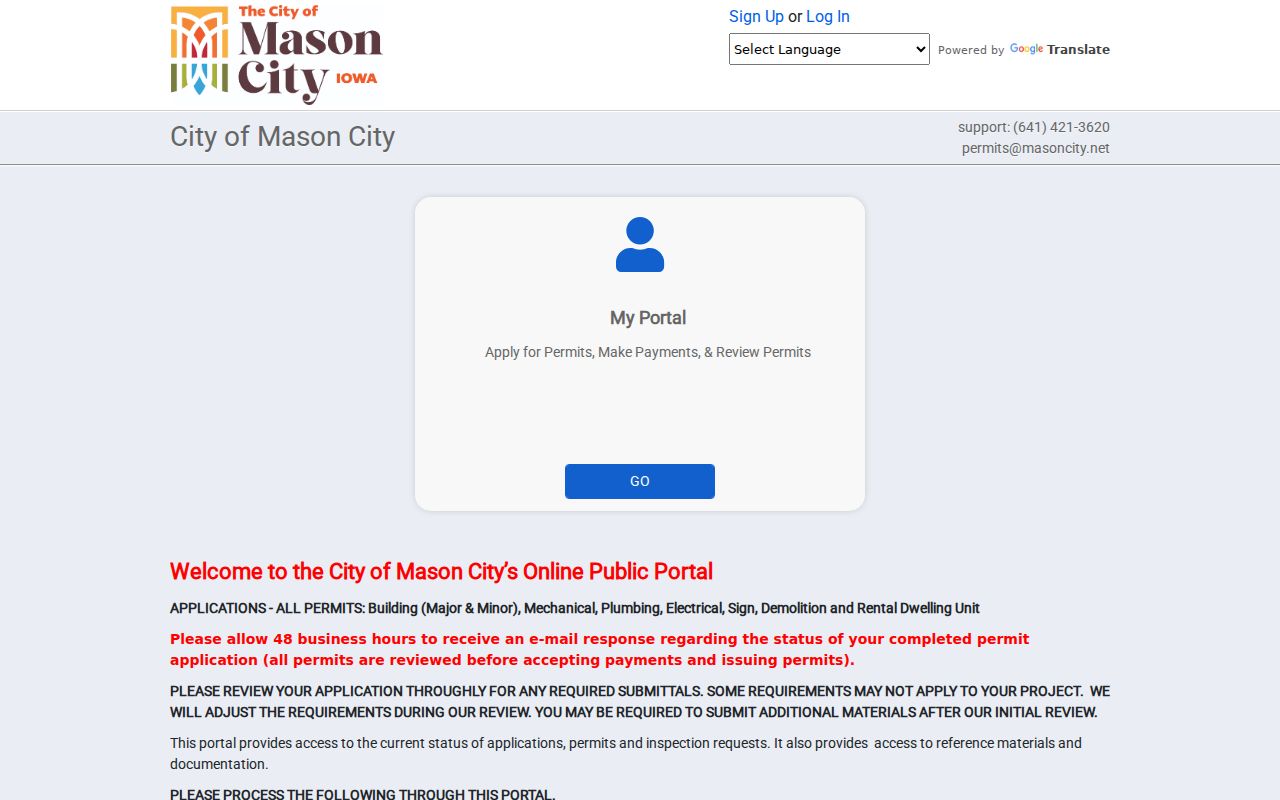
Keep portal roles distinct. A permit contact belongs to a dated application file and should not be folded into a historical household entry.
Trace Mason City Family Records
Printed directories work best as stepping stones between records. Follow a household through several editions, then compare census, probate, naturalization, vital, obituary, cemetery, and deed sources. Each source must independently support the relationship or address.
- Find the surname in a known edition. Inspect the page image and record the exact name, role, address, quadrant, edition, and page.
- Move to the prior and next available years. Note first appearance, persistence, address change, occupational change, and disappearance.
- Ask whether that volume has a true address-order section. If not, request a reverse directory or street guide from MCPL or NCIGS.
- Pair the directory trail with the 1880, 1900, or released 1950 census as the period requires. Use household ties only as the census states them.
- Test the identity with probate, naturalization, deed, obituary, vital, or cemetery records. Same names need more than one separator.
The 1890 federal census is largely lost after the 1921 Commerce Department fire. Local printed runs, deeds, probate, church and cemetery files, and newspapers can bridge the years between 1880 and 1900.
Mason City Records Beyond Directories
The State Historical Society's Cerro Gordo holdings table maps older county series that can confirm a directory lead. It lists auditor transfers beginning in 1867, naturalization indexes and papers across the nineteenth and twentieth centuries, probate indexes and files, recorder land and town-lot books, vital records, and treasurer material.
Naturalization papers can connect a name with a residence, witnesses, dates, and origin details, depending on the form. Probate can name heirs, an executor or administrator, claims, property, and transfers. FamilySearch catalogs include Cerro Gordo naturalization, birth, and death material, though image access may require an account or affiliate site.
Capture the archive collection, box, reel, book, page, or image. If custody is unclear, ask the State Historical Society before requesting the same historical series from a county office.
Mason City Record Timeline
The directory shelf fits a longer local record history. Mason City became the county seat in 1855, which helps explain why county legal and family records cluster here even when the subject lived elsewhere in Cerro Gordo County.
| Date | Directory and archive milestone |
|---|---|
| 1850s | Recorder deed, land, and town-lot series begin in State Historical Society holdings. |
| 1868 | The Mason City centennial book preserves early business-directory material. |
| 1900 | The earliest surfaced R.L. Polk year in the researched local run. |
| 1905 | The Carnegie library opened, adding an institution that later supported local-history continuity. |
| 1958-61 | The Library of Congress telephone-directory item records names, addresses, exchanges, and civic guides. |
| 1993 | NCIGS reports its floppy-disk-based local obituary project moving online in summer. |
The Mason City centennial book adds plats, old settlers, library history, and cemetery material. Treat it as a historical source, then verify a precise land or life event in the underlying public record.
Limits of Mason City Records
A printed directory may omit people, list one subscriber, combine a business and residence, or preserve an outdated address by publication time. OCR adds another layer of error. The entry is a dated historical lead, not proof of current identity, title, or residence.
Reverse or criss-cross coverage for Mason City was not separately verified online. Ask the local repositories for the title and year rather than describing an alphabetical Polk volume as address-indexed. The modern address and parcel workflow belongs to the Mason City street directory.
Research discipline. Cite the edition, page image, exact entry, source, and access date, then publish only the minimum historical details needed for a lawful family or place-history question.
A careful conclusion uses words such as “listed,” “recorded,” or “shown in the edition.” It does not turn an archival entry into a claim about the present.
The Cerro Gordo tax search is another modern source that should remain separate from historical directory evidence.
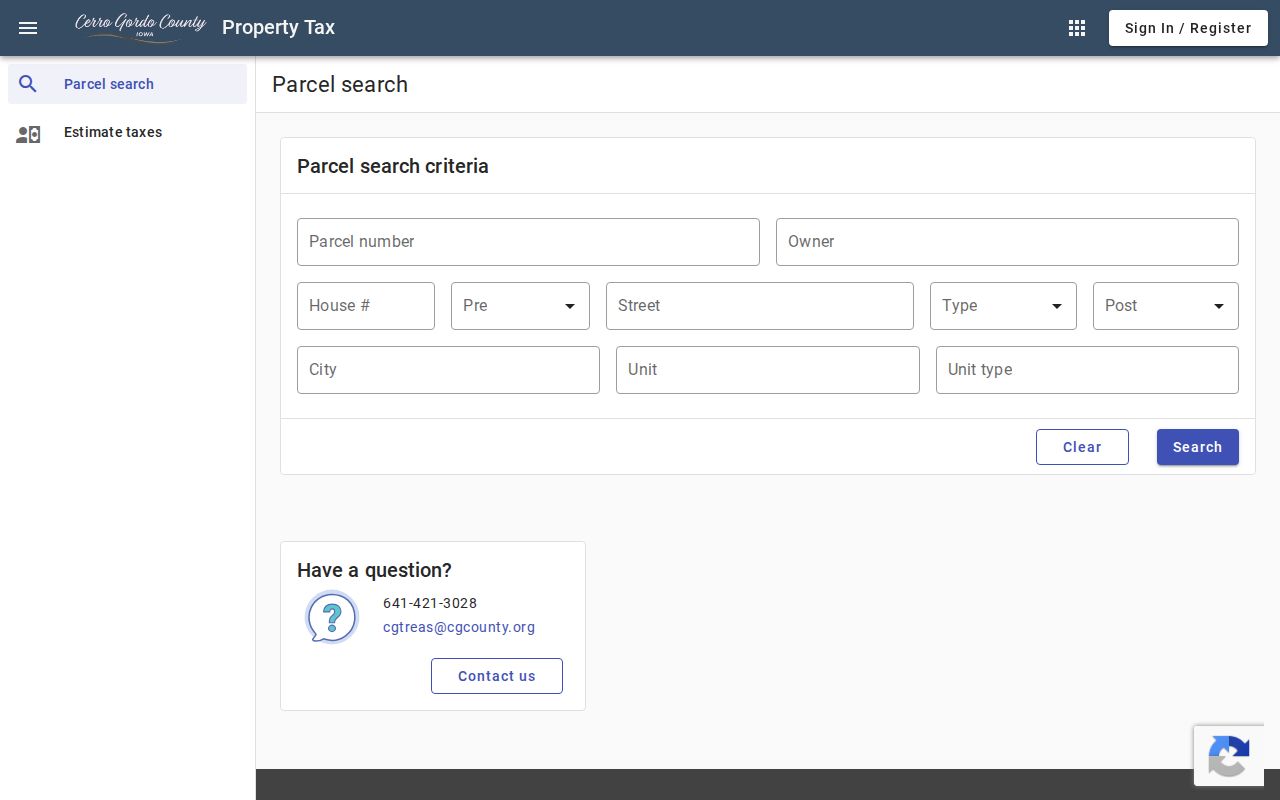
Use the archive edition for the historical claim and the tax portal only for a dated parcel-account question.